Hit enter to search or ESC to close
20 October 2026
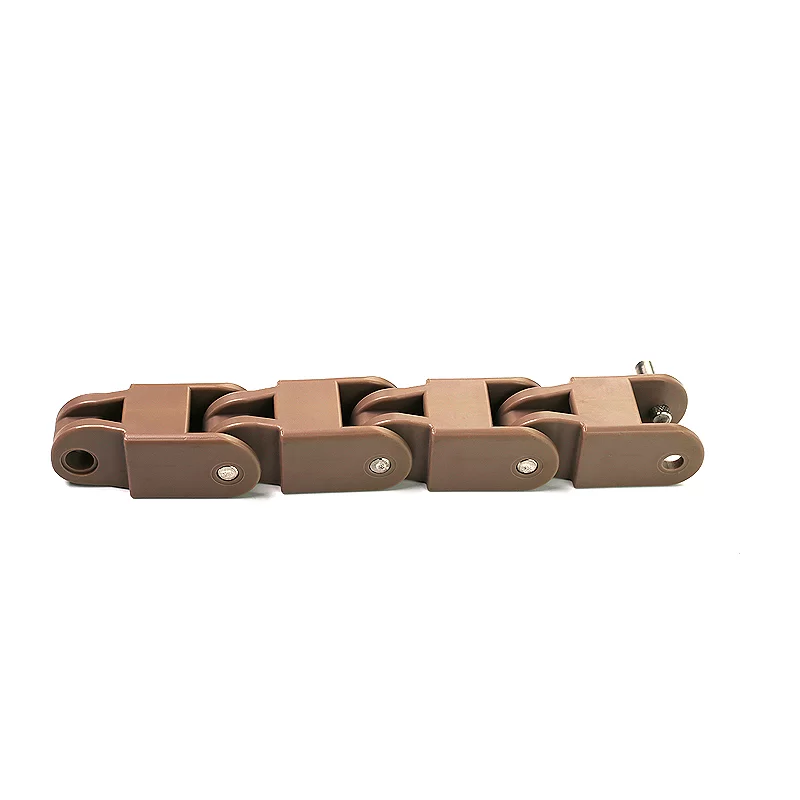
Initial unit price differences between Polyacetal (POM), Polypropylene (PP), and reinforced engineering plastics do not reflect total cost of ownership over the component lifecycle in medium-to-heavy-duty industrial applications. When procurement managers evaluate purchasing budgets for a 2.5-inch (63.5 mm) plastic conveyor chain, focusing exclusively on upfront material quotes creates a false economy.
Long-term maintenance expenditure and electrical energy consumption frequently outweigh initial material savings across extended conveyor layouts handling packaged foods, containers, and industrial products. Operational efficiency depends directly on aligning material selection with operating loads and facility maintenance schedules.
Base polymer resin pricing dictates initial production expenses for molded components on 2.5 inch (63.5 mm) conveyor lines. Injection molding facilities factor resin pellet acquisition, thermal stability requirements, and mold wear rates into their initial pricing structures for industrial purchasers.
Polyacetal raw material costs remain historically higher per kilogram compared to standard Polypropylene (PP). This cost differential stems from the complex synthesis and stabilization chemistry required for engineering-grade acetal polymers.
Purchasing agents evaluating packaged foods, confectionery goods, and bottling transport systems frequently encounter immediate price gaps between standard and reinforced polymers. Relying strictly on initial purchase price creates a false economy for industrial procurement teams.
Upfront savings achieved by selecting lower-priced polymer options often vanish when premature component degradation occurs under medium-to-heavy-duty operational stress. Initial unit price differences do not reflect the overall cost of maintaining continuous line operations across automated material handling systems.
Food processing, packaging lines, and logistics distribution centers demand high mechanical strength from thermoplastic components. Conveyors transporting heavy cartons, metal cans, and bulky parcels generate severe surface wear on conveyor chain pins and top plates. When throughput speeds and unit weights increase, standard unreinforced polymers can deform under continuous tension.
Logistics facilities operating multi-shift networks require robust material specifications to withstand continuous friction without surface pitting. Material handling systems in warehousing environments place heavy reliance on the structural integrity of the 2.5 inch (63.5 mm) pitch chain to move packaged goods smoothly through accumulation tables and incline sections.
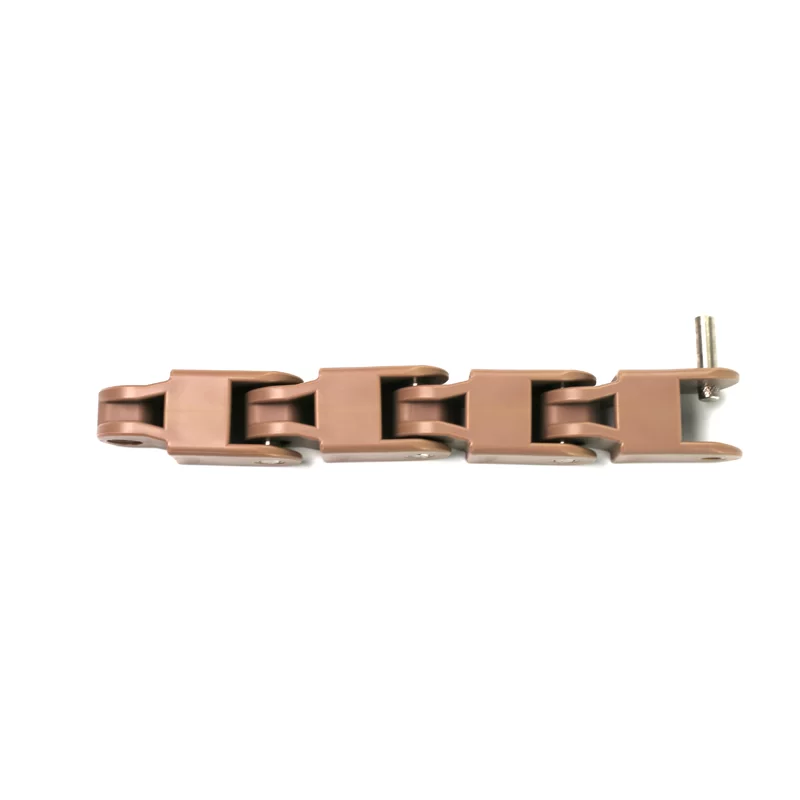
Polyacetal (POM) delivers high tensile strength and dimensional stability under heavy mechanical loads, making it suitable for high-speed bottling lines and automated warehousing layouts. Polypropylene (PP) provides chemical resistance for wet environments in food processing, though it exhibits lower load thresholds compared to engineering plastics. Reinforced engineering plastics combine base resins with specialized fillers to support heavier payloads in industrial manufacturing without excessive deflection.
Operating temperatures and chemical washdown cycles dictate whether unreinforced or reinforced grades should be specified for a given conveyor run. Procurement teams must evaluate these operational thresholds to avoid unexpected component failure across production lines.
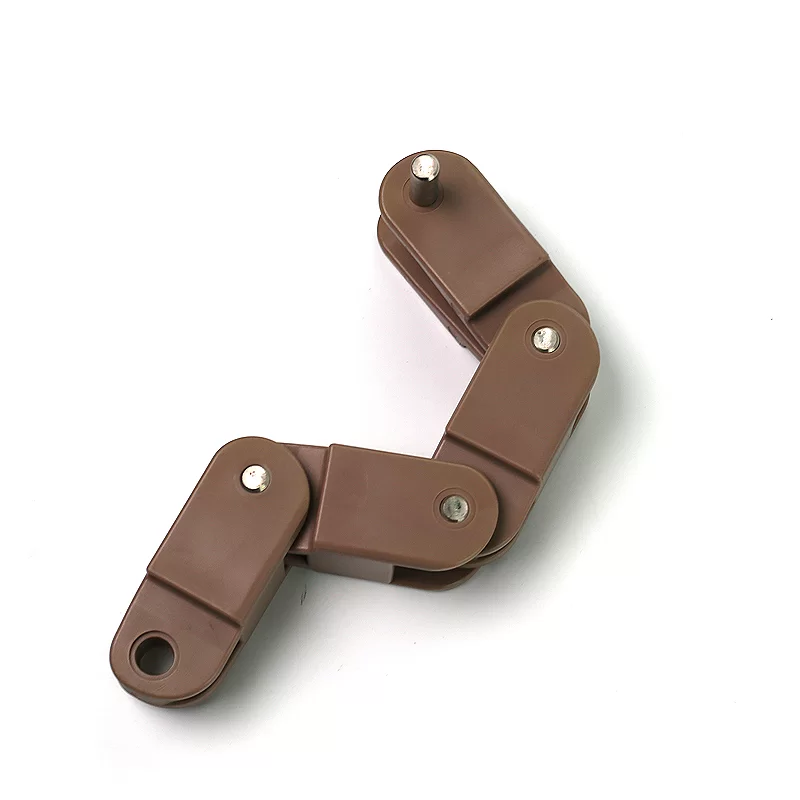
Proper material selection prevents premature chain degradation and catastrophic line failures by accommodating specific load profiles and environmental hazards. Exposing standard thermoplastic grades to abrasive industrial environments or excessive tensile loads accelerates wear across hinge joints and drive sprockets. Engineers specifying 2.5 inch (63.5 mm) pitch components must verify that the chosen polymer withstands both the static payload and the dynamic friction generated during continuous operation.
Documented wear tolerances and load capacity limits can be evaluated using technical data to be confirmed with the supplier prior to final procurement sign-off.
Evaluating thermoplastic polymers requires balancing initial material investment against subsequent operational resilience. Selecting Polyacetal (POM), Polypropylene (PP), or reinforced engineering plastics determines the baseline financial commitment and operating lifespan within food processing, beverage production, and logistics facilities.
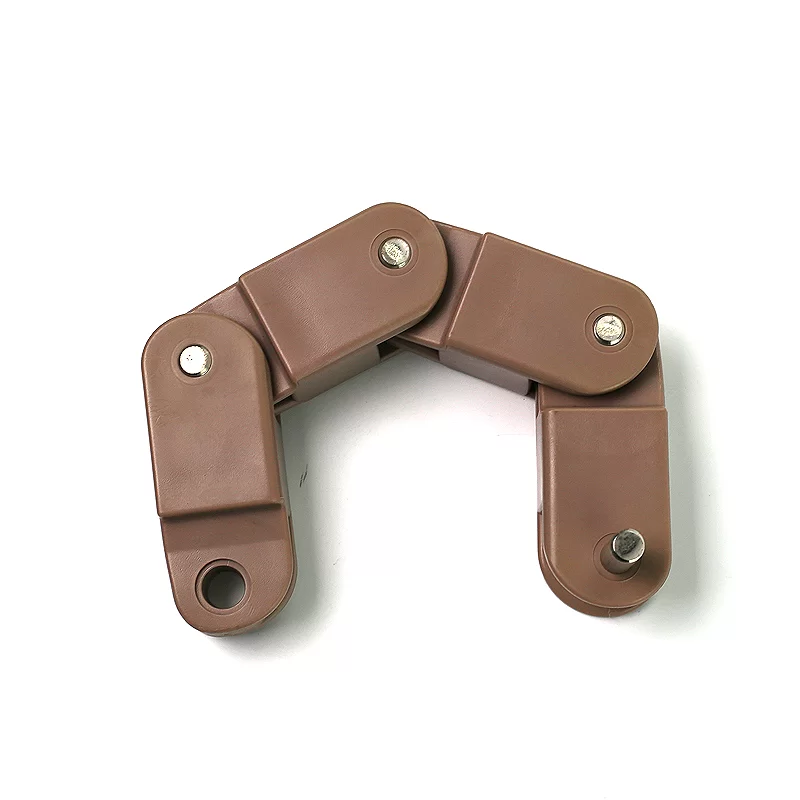
| material | capacity | application | Unit Cost Tier |
|---|---|---|---|
| Polyacetal (POM) | Medium to heavy-duty applications | packaged foods, beverages, automotive parts | Higher |
| Polypropylene (PP) | Medium to heavy-duty applications | packaged products, containers, boxes | Lower |
| reinforced engineering plastics | Medium to heavy-duty applications | industrial products, mechanical components | Moderate to High |
Trade-offs between upfront material investment and subsequent operational resilience dictate that lower initial expenditures for standard PP options often lead to elevated component replacement frequencies.
Conversely, specifying Polyacetal or reinforced alternatives increases initial CapEx while securing long-term mechanical stability under continuous operational stress.
Procurement teams balancing MRO budgets must evaluate whether these material investments align with facility shutdown schedules to avoid unscheduled line interruptions.
Conveyor drive motors must constantly overcome surface friction generated by continuous chain articulation and sliding contact along wear strips. When specifying 2.5-inch pitch systems for logistics and warehousing setups, the inherent coefficient of friction for the chosen polymer directly dictates the electrical torque required to maintain constant belt velocity.
Polyacetal and reinforced engineering plastics exhibit lower sliding friction coefficients against common guide profiles compared to untreated polypropylene alternatives. Lower frictional drag translates into reduced mechanical resistance at every bend and straight section of the transport track.
Extended conveyor lines handling packaged goods, cartons, and bottled products compound electrical consumption losses over thousands of operational hours annually. Plant engineers evaluating energy efficiency across large industrial manufacturing facilities calculate that even marginal reductions in motor load yield substantial kilowatt-hour savings.
When high-efficiency POM components replace standard materials on long runs, the resulting drop in electrical power consumption offsets the higher upfront material investment within predictable operating intervals.
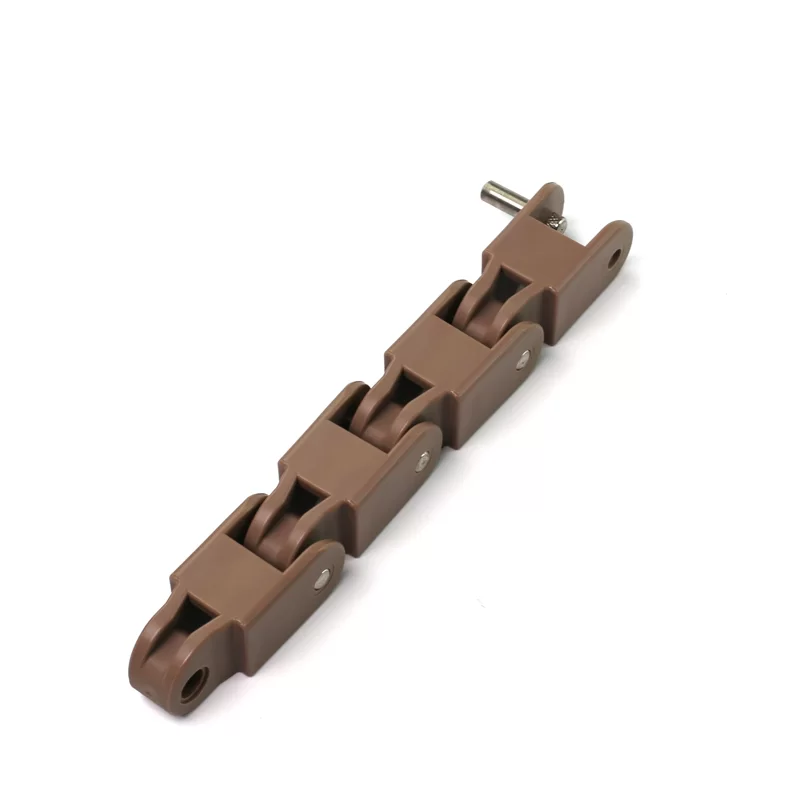
Continuous electrical monitoring data from beverage production lines indicates that diminished frictional drag directly lowers amperage draw on central drive gearboxes. To verify exact power reduction metrics for specific throughput speeds, operators can request energy consumption modeling documentation directly from the supplier.
Aligning thermoplastic conveyor chain maintenance intervals with scheduled facility shutdowns prevents catastrophic financial losses associated with unscheduled line stoppages in automated warehousing and packaging facilities. Plant engineers schedule component swaps during pre-planned operational halts rather than reacting to mid-shift failures.
Unscheduled downtime disrupts high-throughput operations handling containers and bottled goods far more severely than planned three-day facility overhauls. Facility engineering teams schedule wear inspections around seasonal dips in throughput or designated maintenance windows to protect annual production quotas.
Tracking mechanical wear indicators on 2.5-inch pitch reinforced engineering plastics and Polyacetal (POM) links allows maintenance technicians to replace chains prior to structural separation. Measuring wear elongation along extended conveyor runs reveals cumulative tension stress long before sprocket engagement fails.
Pin and bushing interfaces accumulate abrasive wear when transporting items across high-speed sorting lines. Technicians monitor hinge articulation points for excessive lateral play and pitch stretching. Maintenance planners determine precise replacement windows by evaluating these wear metrics against operating hours and load factors.
Transitioning from reactive component swaps to scheduled MRO interventions stabilizes annual repair budgets for facility managers across industrial manufacturing and warehousing sectors. Predictable replacement cycles eliminate rush-shipping fees for emergency replacement links and reduce overtime labor expenses incurred during nocturnal repairs.
Procurement professionals calculate total MRO savings by contrasting the cost of planned bulk replacements against frequent emergency repairs. This structured approach ensures that maintenance budgets directly support long-term plant profitability without unexpected expenditures.
Unified financial evaluations that synthesize initial purchase costs, electrical energy consumption, and MRO lifecycle intervals demonstrate that Polyacetal (POM) and reinforced engineering plastics deliver superior long-term returns for medium-to-heavy-duty industrial lines. Plant engineers building internal business cases for capital expenditure upgrades must weigh these cumulative savings against the seemingly attractive upfront pricing of standard polypropylene (PP) alternatives.
Building a robust internal business case requires plugging specific operating variables into a standardized lifecycle formula.
Upfront material acquisition cost per linear meter for 2.5-inch pitch components.
Cumulative electrical energy expenditure driven by frictional drag on extended conveyor layouts.
Planned facility shutdown schedules and component replacement intervals across high-load applications.
Specifying Polyacetal or reinforced engineering plastics for material handling systems in food processing, beverage production, and automotive manufacturing directly mitigates the risk of unexpected line stoppages. These engineering-grade thermoplastics maintain structural integrity under continuous tensile stress, preventing premature degradation that frequently neutralizes any initial savings achieved by selecting lower-priced polymer options.
Procurement teams authorized to approve CapEx line upgrades should evaluate financial amortization over a multi-year horizon rather than focusing exclusively on initial invoice totals. Total operational efficiency depends entirely on aligning the chosen material grade with operating loads, ambient environments, and facility maintenance calendars.
Initial component costs fail to account for long-term electrical power consumption and unscheduled maintenance expenses across extended layout runs. Polyacetal and reinforced variants command higher upfront prices per kilogram than standard polypropylene due to raw resin economics, but lower frictional drag reduces sustained motor load.
Conveyors handling packaged foods, cartons, and containers under continuous mechanical stress require engineering-grade polymers to prevent premature elongation and component deformation. Selecting unreinforced grades for rigorous medium-to-heavy-duty service accelerates wear along hinge pins and top plates.
Aligning component overhauls with scheduled plant downtime prevents catastrophic mid-shift line stoppages in warehousing and manufacturing facilities. Wear progression along joint interfaces dictates the replacement window, ensuring total MRO expenditure remains predictable.
The overall financial return depends on balancing initial material acquisition outlays against ongoing electrical efficiency and component lifespan. Facilities specify Polyacetal or reinforced alternatives when projected maintenance savings offset the initial unit price differential over the service lifecycle.
Automotive parts and heavy parcel handling require high tensile resilience to resist continuous operational tension without surface degradation. Engineering plastics provide structural stability under sustained mechanical loads where standard thermoplastic options soften or fail prematurely.
Strategic purchasing decisions regarding 2.5-inch pitch conveyor lines depend entirely on total lifecycle financial tracking rather than initial procurement outlays. Quantifying electrical resistance, planned facility maintenance intervals, and replacement frequencies together defines the true cost structure for automated industrial workflows.
Procurement teams managing logistics networks, packaging facilities, and manufacturing plants can evaluate comparative expenses based on specific operating loads and destination port logistics variables. Facilities ready to optimize system performance can request targeted material audits and comparative cost breakdowns directly aligned with their conveyor configuration.




-20260310085541.webp "Modular Belt Straight Running")

