Hit enter to search or ESC to close
The stability of high-speed production lines often hinges on the precision of the conveyance system, particularly when transporting components with small footprints. When products tip or slide during transport, the resulting downtime and waste can severely erode operational margins.
Industries such as electronics assembly and pharmaceutical packaging are increasingly moving away from monolithic belts toward modular systems. This shift is driven by the need for micron-level alignment and the ability to perform maintenance without dismantling entire conveyor sections.
Choosing between various modular belt suppliers requires an understanding of how pitch size, material composition, and modular architecture impact long-term throughput. This analysis explores the technical advantages of high-precision modular systems in demanding environments.


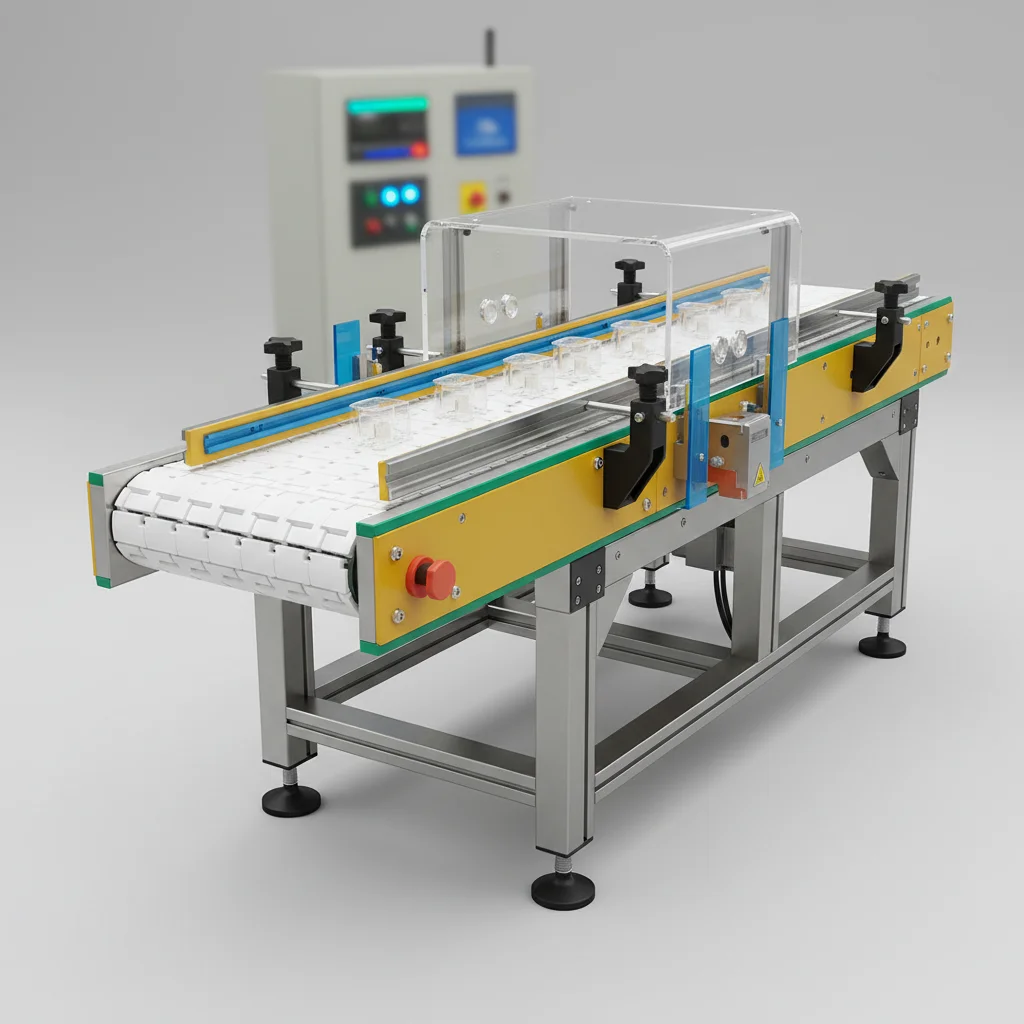
The 0.5-inch pitch design is not merely a size preference but a technical solution for stability. By reducing the gap between modules, the belt creates a more continuous surface, which is critical for products with small footprints that would otherwise fall into larger gaps or tip during acceleration.
This architecture utilizes precision injection molding to ensure that every link maintains a strict geometric tolerance. When these links are snapped together, they form a rigid yet flexible chain that resists stretching and tracking errors, ensuring that items remain perfectly aligned from the start to the end of the line.
The choice of polymer determines the belt's resistance to environmental stressors. Polypropylene (PP) is frequently utilized for its exceptional chemical resistance and cost-efficiency in general industrial applications. Polyethylene (PE) offers a different set of advantages, particularly in high-moisture environments where its low-friction properties and moisture resistance are paramount.
For applications requiring maximum structural strength and minimal wear, Acetal (POM) is the preferred material. POM provides the highest rigidity and lowest friction coefficient, which reduces the load on the drive motor and extends the overall lifespan of the conveyor system. This material is especially critical in heavy-duty cycles where mechanical stress is constant.
Beyond strength, hygiene compliance is a non-negotiable factor in food and pharma sectors. Using FDA-compliant materials ensures that the belts do not leach chemicals into the product and can withstand rigorous sanitization cycles involving harsh cleaning agents without degrading.
Precision in the conveyance chain directly translates to reduced product rejection rates. In electronics assembly, where components are often only a few millimeters in size, a slight deviation in belt tracking can lead to misalignment with robotic pick-and-place systems, causing expensive assembly errors.
The transition to a 0.5-inch pitch modular system eliminates the inherent variability of traditional belts, providing a stable platform that minimizes product slippage and tipping during high-speed operational cycles.
This stability allows manufacturers to increase conveyor speeds without sacrificing accuracy. By ensuring consistent pitch and alignment across the entire line, the system reduces the need for manual adjustments and minimizes the risk of unplanned stoppages caused by product jams.
Evaluating a conveyance solution requires looking beyond the initial purchase price. The true value is found in the balance between durability, maintenance speed, and product stability. High-precision modular belts are engineered to maximize these three indices, specifically targeting the elimination of "whole-belt replacement" cycles.
The following index illustrates the relative performance advantages of a high-precision 0.5" pitch modular system compared to standard conveyance options across key industrial metrics.
In food packaging, the open structure of modular belts allows for efficient drainage and sanitization, preventing the buildup of organic contaminants. For a manufacturer evaluating a line upgrade, the transition to a 0.5" pitch system ensures that small vials or packaged snacks are transported without tipping, even during rapid changes in direction or incline.
In the electronics sector, the low-friction surface properties of materials like POM reduce static buildup and mechanical wear on delicate components. This makes the system an essential component for automated assembly lines where micron-level precision is the primary driver of production efficiency.
The most significant shift in modern conveyor management is the move from "total replacement" to "targeted module replacement." Traditional belts, when damaged in a single section, often require the entire length to be removed and replaced, leading to hours or even days of lost production.
Modular systems solve this by allowing operators to snap out a single damaged link and replace it in minutes. This "snap-together" assembly method drastically reduces the Mean Time to Repair (MTTR) and allows for preemptive maintenance based on wear tracking without shutting down the entire facility.
By integrating inventory control for individual modules, companies can maintain a minimal stock of replacement parts that ensure zero long-term downtime. This approach transforms maintenance from a disruptive event into a routine, low-impact task.
When comparing modular plastic belts to traditional rubber or fabric belts, the decision usually rests on the trade-off between initial cost and operational lifespan. Traditional belts may offer lower upfront costs but suffer from stretching, tracking issues, and high replacement costs.
Modular belts, such as those provided by Rellwin industry Co, Ltd, prioritize long-term reliability. The ability to navigate curves and inclines while maintaining product alignment provides a level of versatility that traditional flat belts cannot match.
The following framework provides a relative assessment of how these two technologies perform across critical investment metrics.
| Metric | Traditional Belts | Modular 0.5" Pitch | Operational Impact |
|---|---|---|---|
| Replacement Cost | High (Full Belt) | Low (Single Module) | Reduced CAPEX over time |
| Downtime Duration | Hours to Days | Minutes | Higher machine utilization |
| Hygiene Level | Moderate/Difficult | High/Easy Clean | FDA Compliance stability |
| Product Stability | Prone to slippage | High Precision | Lower product rejection |
| Service Lifespan | Limited by wear | Renewable/Extended | Sustainable asset life |
| Installation | Complex Tensioning | Snap-together | Rapid system deployment |
Small electronics components have very small footprints, making them susceptible to tipping or falling through gaps in standard conveyor belts. The 0.5-inch pitch creates a dense, stable surface that supports these small items, ensuring they remain upright and properly aligned during high-speed transport and robotic handling.
Unlike fabric belts that can absorb moisture and harbor bacteria, modular belts are made from non-porous materials like PP and PE. Their open structure allows for easy drainage and complete wash-downs, ensuring that sanitizing agents reach all surfaces, which is critical for meeting FDA and food-grade hygiene standards.
For maximum structural strength and the lowest friction, Acetal (POM) is the best choice. It is significantly more rigid than PP or PE, making it ideal for high-load applications or environments where the belt must withstand constant mechanical tension without stretching.
Yes, the modular design is inherently flexible. Because the belt is composed of interlocking links rather than a single sheet, it can navigate curves, inclines, and declines without losing its structural integrity or causing the transported products to slide out of alignment.
The cost reduction comes from the elimination of full-belt replacements. In a traditional system, one tear can ruin the entire belt. In a modular system, you only replace the specific damaged link. This reduces both the material cost of the replacement and the massive cost of production downtime.
Installation is streamlined through a snap-together assembly process. The links are designed to lock into each other without the need for specialized tools. They are compatible with standard sprockets and side guards, allowing for fast integration into existing automated systems.
The transition to precision modular conveyance is a strategic move toward operational resilience. By prioritizing pitch precision and material suitability, manufacturers can effectively eliminate the instability and downtime associated with traditional belt systems.
For those operating in high-precision sectors, the investment in a modular 0.5-inch pitch system is an investment in consistency. As production demands increase, the ability to maintain micron-level alignment and rapid maintenance will remain the primary differentiator in production efficiency.