Modular Belt in the Packaging Industry
The modular belt conveyor has become an essential component in modern packaging systems. As manufacturing industries continue to move toward automation and high-efficiency production lines, reliable conveying solutions are increasingly important. Modular belts, made from high-quality engineering plastics, provide excellent durability, flexibility, and stability, making them widely used in packaging processes across many industries such as food and beverage, pharmaceuticals, consumer goods, electronics, and logistics.
Compared with traditional conveyor belts, plastic modular belts offer superior performance in terms of maintenance, hygiene, customization, and operational efficiency. Their modular structure allows easy repair and replacement, which reduces downtime and improves productivity in packaging operations.
The Role of Conveyor Systems in Packaging
Packaging lines involve multiple stages, including product transport, sorting, filling, sealing, labeling, inspection, and palletizing. Each stage requires a conveyor system that can operate smoothly and reliably while maintaining accurate product positioning.
Modular belt conveyors are ideal for packaging lines because they provide stable product movement, precise spacing, and compatibility with automated equipment. The modular design also allows the conveyor system to be customized for different packaging layouts, including straight, curved, and inclined conveying paths.
By ensuring consistent product flow between machines, modular belts help packaging systems operate efficiently and minimize production interruptions.
Stable and Efficient Product Transport
One of the most important requirements in packaging operations is stable product handling. Products such as bottles, cartons, pouches, containers, and packages must be transported smoothly without tipping, sliding, or damaging the packaging.
Modular belts provide a flat and stable surface that ensures safe product transportation. Their interlocking plastic modules create a strong and durable structure that can handle both lightweight and moderately heavy products. This makes modular belts suitable for various packaging applications ranging from small consumer goods to large packaged items.
In high-speed packaging lines, the smooth operation of modular belts also helps reduce vibration and noise, improving the overall efficiency of the system.
Applications in Automated Packaging Lines
Modular belts are widely used throughout automated packaging systems. Their versatility allows them to support multiple packaging processes within the same production line.
Product Feeding and Transfer
In the early stage of packaging, modular belts are used to transport products from the production line to the packaging equipment. For example, food products, bottles, or containers are transferred from processing machines to filling or packing stations.
The conveyor ensures consistent product spacing, which is essential for automated packaging equipment to operate accurately and efficiently.
Filling and Sealing Systems
In industries such as beverages, cosmetics, and chemicals, modular belts are used to transport containers through filling and sealing machines. The stability of the conveyor system helps ensure accurate filling and prevents product spillage.
Because plastic modular belts are resistant to moisture and many chemicals, they perform reliably in environments where liquids and cleaning agents are present.
Labeling and Coding Lines
Labeling machines require precise product positioning to apply labels correctly. Modular belt conveyors provide steady and controlled product movement, allowing labeling equipment to operate with high accuracy.
In addition, modular belts can transport products through coding and printing stations, where product information such as batch numbers, manufacturing dates, and barcodes are applied.
Inspection and Quality Control
Quality control is a critical part of packaging operations. After products are packaged, they often pass through inspection systems to detect defects or verify packaging accuracy.
Modular belts provide stable movement for inspection equipment, including vision systems and weight checking machines. Their smooth surface helps ensure reliable detection and sorting of defective products.
Carton Packing and Palletizing
In the final stage of packaging, modular belts transport finished packages to carton packing or palletizing systems. These conveyors handle cartons, boxes, and packaged goods before they are prepared for storage or shipment.
Because modular belts are strong and durable, they can support continuous operation in high-volume packaging environments.
Hygienic and Easy-to-Clean Design
In many packaging industries, particularly food and pharmaceuticals, hygiene is extremely important. Modular belts made from food-grade materials such as polypropylene (PP) or polyoxymethylene (POM) meet strict sanitary requirements.
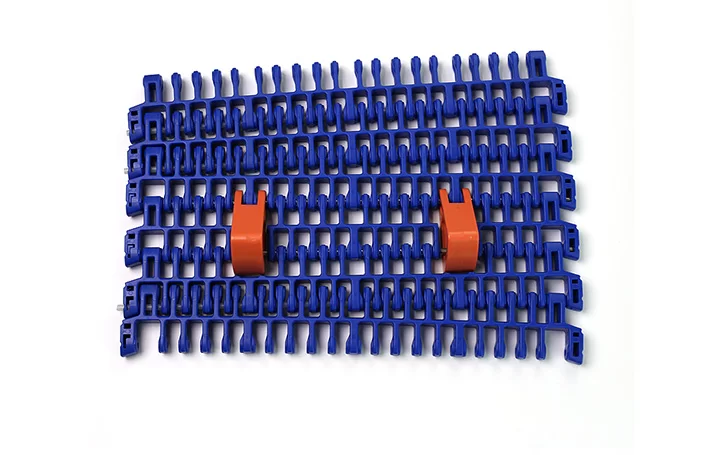
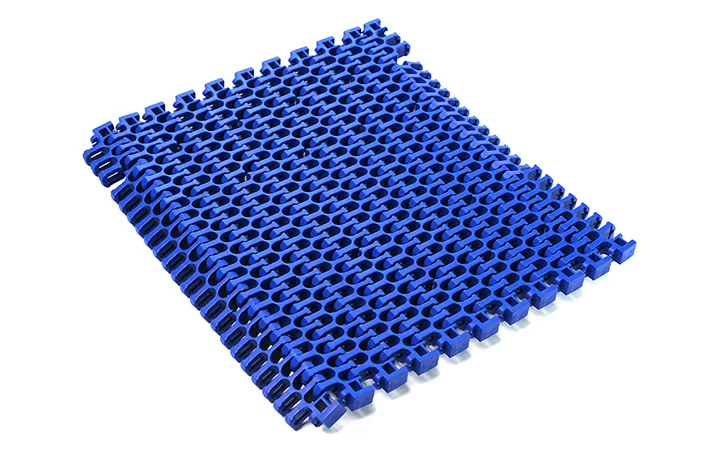
Their design allows easy cleaning and maintenance. Some modular belts feature open-grid structures, which allow dust, liquids, and debris to pass through the belt surface, preventing accumulation and simplifying cleaning procedures.
This hygienic design helps manufacturers maintain high safety standards and comply with industry regulations.
Flexibility in Conveyor System Design
Another major advantage of modular belts in packaging applications is their flexibility in conveyor design. Packaging lines often require conveyors that can adapt to complex layouts and limited factory space.
Modular belts can operate on:
Straight conveyors
Curved conveyors
Inclined or declined conveyors
Spiral conveyor systems
This flexibility allows engineers to design efficient packaging lines that maximize production space and improve workflow.
Advantages of Using Modular Belts in Packaging
Modular belts provide several key benefits for packaging operations:
Durability: High-strength plastic materials resist wear and impact during continuous production.
Low Maintenance: Individual belt modules can be replaced easily, reducing repair time and maintenance costs.
Product Stability: Smooth surfaces ensure safe and consistent product transportation.
Energy Efficiency: Lightweight plastic materials reduce motor load and energy consumption.
Operational Flexibility: Modular belts can be customized with accessories such as side guards, flights, and cleats to meet different packaging requirements.
Supporting Automation in Modern Packaging
As industries increasingly adopt automated packaging systems, reliable conveying technology becomes essential. Modular belt conveyors integrate easily with automated machines, robotics, and intelligent control systems.
Their consistent performance supports efficient material flow and helps manufacturers maintain high production speeds without compromising product quality.
The modular belt conveyor has become an indispensable solution in the packaging industry. Its durability, hygienic design, and flexibility make it ideal for transporting products through various packaging stages, including filling, labeling, inspection, and final packing.
By improving product handling, reducing downtime, and supporting automation, modular belt conveyors help manufacturers enhance packaging efficiency and maintain consistent production quality.



-20260310062132.webp "Modular Belt 0.5-Inch Pitch")