Hit enter to search or ESC to close
When evaluating material handling systems, the choice of belt geometry often dictates the overall efficiency of the production line. For those seeking high-stability transport for heavier or bulkier items, understanding the specific role of 1-inch pitch modular belts is essential. Unlike standard narrow-pitch options, these systems provide a robust surface that minimizes product tipping and ensures consistent alignment across long conveyor runs.
The technical superiority of these belts lies in their composition, utilizing high-quality industrial plastics such as polypropylene (PP), polyethylene (PE), or acetal (POM). This material selection ensures that modular conveyor belt manufacturers can provide solutions that resist chemical corrosion and friction while maintaining structural integrity. For industries like food processing and pharmaceuticals, the intersection of durability and hygiene becomes the primary driver for system adoption.
This guide examines the operational mechanics and procurement criteria for modular plastic systems. By analyzing the relationship between pitch size and load capacity, we provide a technical framework to help you determine if a 1-inch pitch configuration is the optimal choice for your specific assembly or packaging line. For professional grade solutions, explore the capabilities of modular conveyor belt manufacturers.


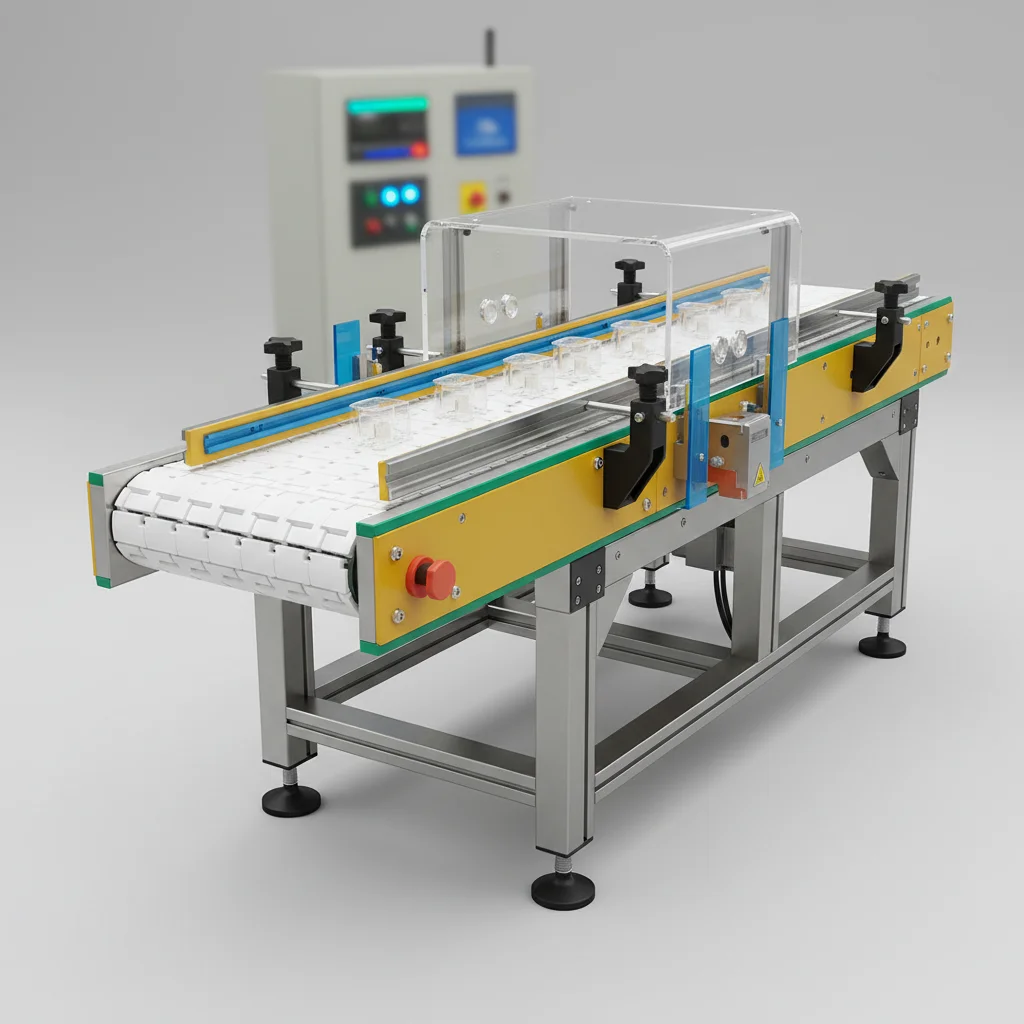
The "1-inch pitch" refers specifically to the distance between the hinge points of adjacent modules. This structural spacing is engineered to create a more stable and robust surface compared to smaller pitch alternatives. By increasing the distance between hinges, the belt can support larger footprints, making it ideal for transporting packaged goods, boxes, and industrial components without the risk of product sagging or misalignment.
From a mechanical standpoint, the modular design allows for precise spacing and consistent alignment. Because the links snap together without the need for specialized tensioning tools, the system remains stable even when navigating complex layouts. This modularity ensures that the belt maintains a flat, reliable conveying surface, which is critical for automated distribution centers where product integrity is non-negotiable.
The performance of a modular belt is fundamentally tied to its polymer base. Polypropylene (PP) is frequently selected for its excellent chemical resistance and cost-effectiveness, while Polyethylene (PE) offers superior impact resistance in colder environments. For high-friction or high-wear applications, Acetal (POM) is the preferred choice due to its exceptional dimensional stability and low coefficient of friction, which reduces energy consumption during operation.
The selection of POM or PP directly affects the belt's lifecycle; high-strength industrial plastics ensure the system withstands continuous heavy loads and high speeds without premature wear of the hinge pins.
Beyond raw material, the reinforced design of the modules allows them to resist deformation under pressure. This is particularly important in environments involving frequent washdowns or exposure to acidic cleaning agents, where the non-corrosive nature of plastic components provides a clear advantage over traditional metal chains.
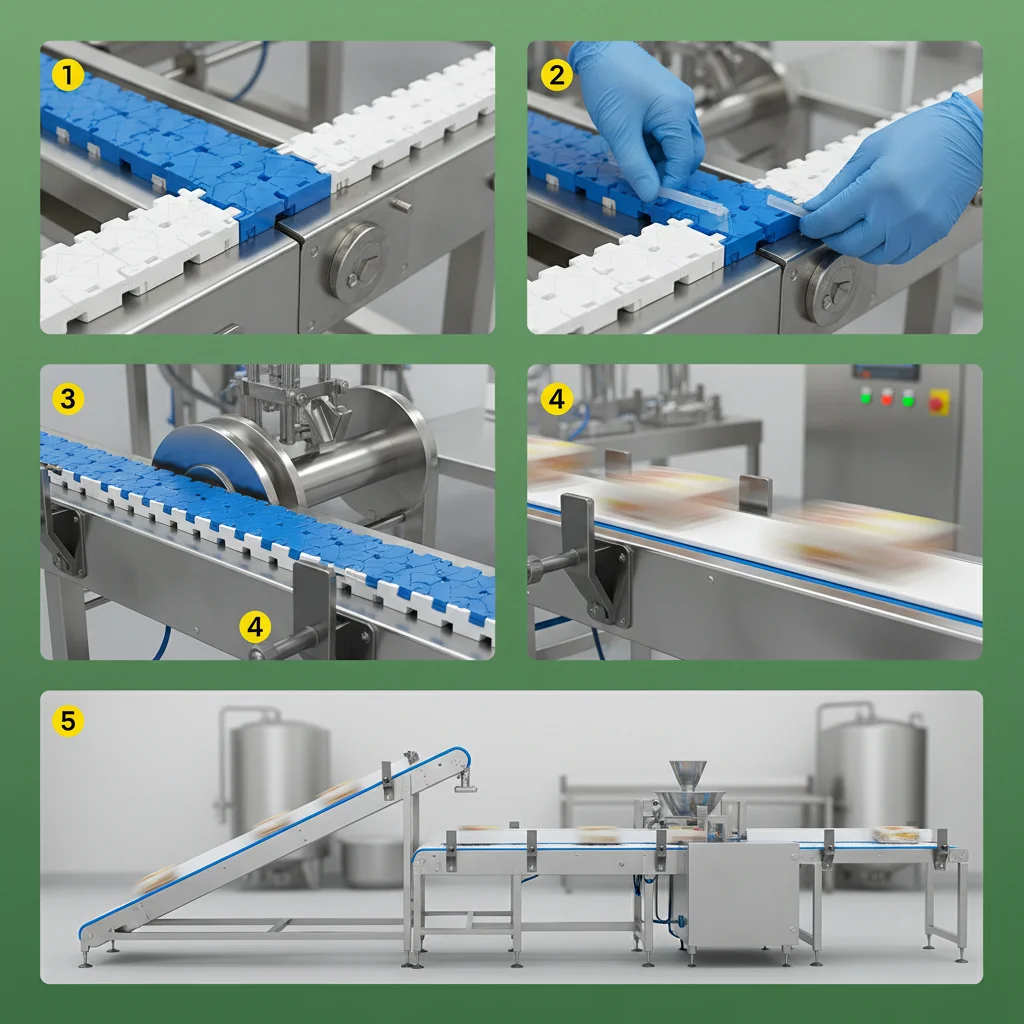
The primary value of a 1-inch pitch system is the reduction of operational downtime. Traditional belts often require complete replacement when a section fails; however, the modular nature allows for the replacement of individual damaged modules. This localized maintenance approach ensures that production lines can be restored in minutes rather than hours.
Modular belts provide a dual benefit: they offer the load-bearing capacity of heavy machinery while maintaining the hygienic properties required for FDA-compliant food and pharmaceutical processing.
Furthermore, the open structure of these belts facilitates superior cleaning and sanitation. In pharmaceutical manufacturing, where vials and bottles must move through controlled environments, the ability to easily sanitize the belt surface prevents cross-contamination and ensures strict compliance with health regulations.
Different polymers offer varying levels of performance depending on the industrial stress applied. For example, Acetal (POM) generally provides the highest wear resistance but may be more sensitive to certain strong acids compared to Polypropylene. Understanding these trade-offs is essential for optimizing the belt's service life.
The following data represents a relative comparison of material properties, focusing on friction levels, chemical resistance, and impact strength to guide the selection process for different conveyor layouts.
In food processing, the 1-inch pitch modular belt is extensively used for transporting baked goods and beverage bottles. Its ability to withstand frequent washdowns and its FDA-compliant materials make it a staple in hygienic environments. Similarly, in packaging lines, it efficiently moves medium-to-large cartons, reducing the incidence of product tipping during high-speed transitions.
Warehouse automation and assembly lines also benefit from this configuration. Whether it is moving heavy industrial components or electronics parts, the precision-molded modules ensure smooth operation and consistent spacing. This reliability is critical for integrated systems where conveyor belts must sync perfectly with robotic arms or sorting sensors.
The trend in material handling is moving toward "intelligent" conveyors. We expect to see more integration between modular belts and sensor technology, allowing for real-time wear monitoring. By embedding tracking markers into the plastic components, manufacturers can predict when a specific module is likely to fail, shifting from reactive to predictive maintenance.
Additionally, there is a growing focus on sustainable polymers. The development of recycled yet high-strength industrial plastics could reduce the environmental footprint of conveyor systems without sacrificing the corrosion resistance and low-noise operation that plastic chains are known for.
Customization will also become more granular. As production lines become more flexible, the ability to quickly adjust belt widths and lengths using standardized modular links will allow factories to reconfigure their entire layout in a fraction of the time currently required.
Integrating a new modular belt into an existing system often presents challenges regarding sprocket alignment and tensioning. Misalignment can lead to increased wear on the side guides and potentially cause the belt to jump the track, which results in costly unplanned downtime.
To mitigate these risks, the use of high-precision sprockets and adjustable tensioners is recommended. Ensuring that the conveyor frame is perfectly level during installation prevents uneven loading across the belt width, extending the life of the plastic links.
For those operating in extreme temperatures, material selection is the primary solution. Using PE for freezer applications or high-temp PP for ovens ensures that the belt does not become brittle or soften, maintaining the 1-inch pitch stability regardless of the thermal environment.
| Material | Key Strength | Primary Use Case | Maintenance Level |
|---|---|---|---|
| Polypropylene (PP) | Chemical Resist | Food Processing | Low |
| Polyethylene (PE) | Impact Strength | Cold Storage | Medium |
| Acetal (POM) | Low Friction | Heavy Assembly | Low |
| Reinforced Plastic | High Load | Logistics Hubs | Medium |
| FDA Grade PP | Hygienic | Pharmaceuticals | Low |
| Custom Polymer | Specialized | Chemical Plants | High |
A 1-inch pitch modular belt is a conveyor system where the distance between the hinge pins of each interlocking plastic module is exactly one inch. This larger spacing provides a more stable surface for transporting medium-to-heavy products, reducing the likelihood of item tipping or belt deformation compared to smaller pitch designs.
FDA-compliant Polypropylene (PP) or Acetal (POM) are generally the best choices. PP offers excellent chemical resistance for cleaning agents, while POM provides the low friction and dimensional stability required for precise movement of vials and bottles in controlled environments.
Unlike traditional belts that require a full replacement when damaged, modular belts allow you to replace only the damaged links. This means you can remove a single broken module and snap in a new one without dismantling the entire conveyor, significantly reducing downtime.
Yes, 1-inch pitch modular belts are designed for versatility. They can be configured for straight runs, curves, and inclines. The modular links maintain their structural integrity and tracking performance even when the conveyor path is not linear.
Choose Polypropylene (PP) for general food and chemical resistance, Polyethylene (PE) for low-temperature or high-impact environments, and Acetal (POM) for high-wear applications requiring the lowest possible friction and maximum stability.
Lifespan is primarily affected by the accuracy of sprocket alignment, the choice of polymer relative to the operating temperature, and the frequency of sanitation cycles. Proper tensioning and regular inspection of the side guides can significantly extend the belt's service life.
Selecting a 1-inch pitch modular belt is a strategic decision for manufacturers handling bulky or heavy products. By combining the strength of industrial polymers like POM and PP with a modular architecture, these systems offer a superior balance of stability, hygiene, and maintainability. The ability to perform localized repairs and customize widths ensures that the conveyor system can evolve alongside production needs.
For businesses aiming to optimize their material handling efficiency and reduce operational costs, partnering with experienced manufacturers is key. If you are looking for durable, low-noise, and corrosion-resistant conveyor solutions, we invite you to review the technical specifications and product range available at https://www.rellwin.com to find the perfect fit for your facility.