Hit enter to search or ESC to close
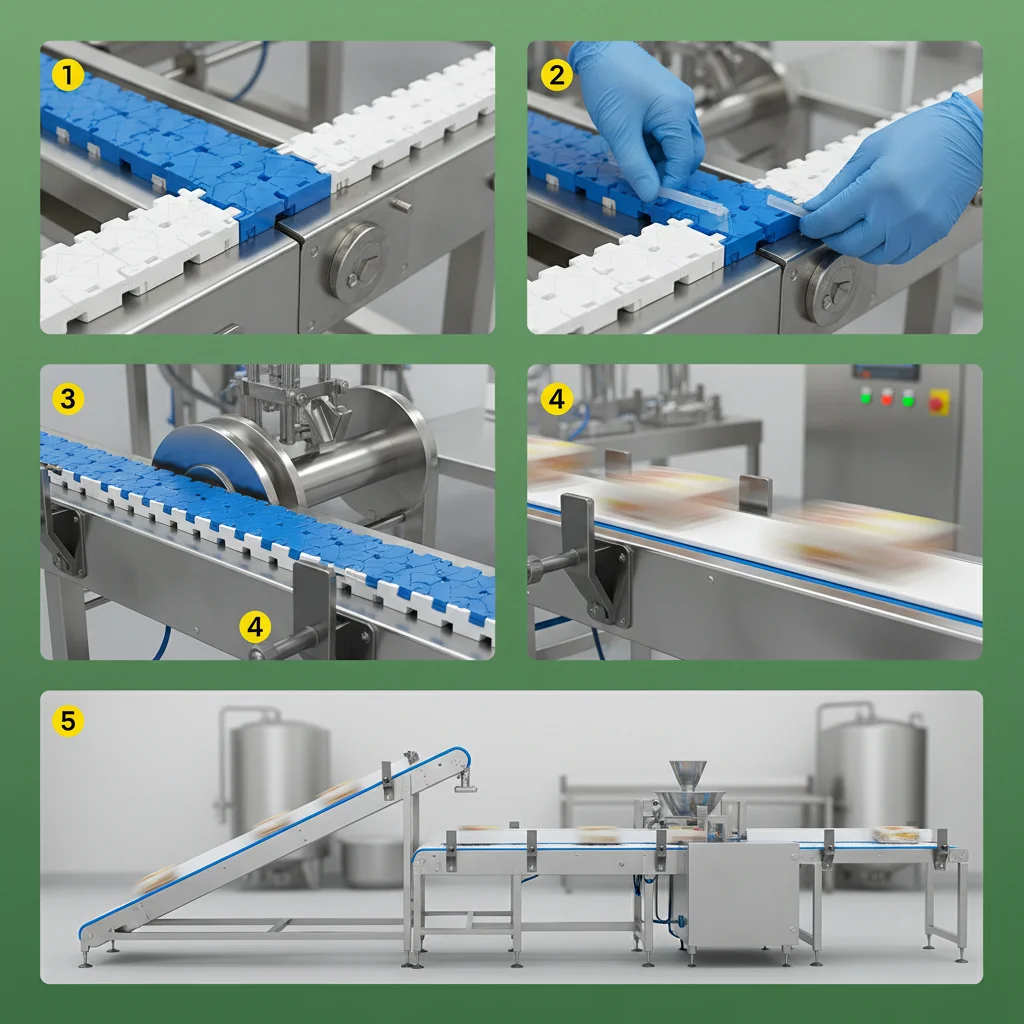
The global movement of goods in automated production lines is undergoing a critical transition from traditional metallic systems to high-performance polymers. As industries strive for lower maintenance and higher hygiene standards, the demand for china plastic chain conveyor wholesale solutions has surged, reflecting a broader shift toward materials that balance durability with operational efficiency.
This transition is driven by the inherent limitations of steel chains, specifically their vulnerability to corrosion and the high cost of lubrication. In environments such as food processing or pharmaceutical manufacturing, where washdown procedures are mandatory, the ability of a conveyor system to resist chemical degradation while maintaining structural integrity is no longer an advantage—it is a requirement.
This technical analysis explores the engineering logic behind modular plastic chains, focusing on how specific pitch designs and material selections impact long-term system reliability. By evaluating these factors, procurement engineers can better navigate the complexities of sourcing high-quality conveyor components.


The core of modern plastic conveyor chains lies in the use of high-grade engineering plastics such as Polyacetal (POM) and Polypropylene (PP). These materials are selected for their high mechanical strength and dimensional stability, which are critical for preventing chain stretch over time.
Unlike metal-on-metal contact, these polymers provide a naturally low-friction interface. This significantly reduces the energy required to drive the conveyor and minimizes the noise pollution in the factory environment, directly improving the workplace ergonomics.
The pitch of a conveyor chain—the distance between the centers of two adjacent pins—is a fundamental engineering variable. A 1.5 inch (38.1 mm) pitch is specifically engineered to provide an optimal balance between flexibility and load-bearing capacity, making it versatile for both linear and curved paths.
From a mechanical perspective, a larger pitch typically allows for higher speed and lower pin-wear, while a smaller pitch offers smoother movement for delicate products. The 1.5 inch configuration serves as a "mid-range" standard that supports light to medium-duty industrial applications without sacrificing system agility.
When integrating these chains, engineers must ensure that the sprocket teeth are precisely aligned with this pitch. Misalignment leads to accelerated wear on the chain links and can cause catastrophic system failure due to "jumping" or snapping under load.
In industries where contamination is a critical risk, the material composition of the conveyor is the first line of defense. Engineering plastics are inherently resistant to many acids, alkalis, and oxidizing agents that would typically corrode stainless steel.
Furthermore, the non-porous surface of high-quality POM or PP prevents the buildup of biofilms and bacteria, ensuring that the conveyor system contributes to a sterile production environment rather than becoming a source of contamination.
Evaluating the efficiency of a conveyor system requires a look at the total cost of ownership (TCO). Plastic systems typically exhibit lower energy consumption due to their lightweight nature, which reduces the inertial load on the drive motors.
Beyond energy, the maintenance cycle is significantly extended. The ability to replace individual modular sections rather than the entire chain length reduces downtime and lowers the labor costs associated with system overhauls.
In a typical beverage bottling line, these chains are deployed in high-humidity areas where bottles move from filling to labeling. The corrosion resistance of the plastic ensures that the system does not rust despite constant exposure to moisture and cleaning agents.
Similarly, in electronics assembly, the smooth operation of the chain is critical for transporting delicate PCB boards. The lack of vibration and the precision of the 1.5 inch pitch allow for stable movement, reducing the risk of component displacement during high-speed transport.
The next generation of conveyor chains is moving toward "smart polymers" with integrated wear-sensing capabilities. By incorporating conductive elements into the plastic matrix, it may soon be possible to monitor chain tension and wear in real-time without stopping the production line.
Additionally, there is a growing focus on reinforced engineering plastics that can handle higher temperature ranges. While current materials are typically rated up to 90°C, research into high-performance thermoplastic composites aims to push these boundaries to support more extreme thermal processing.
Sustainability is also becoming a primary driver, with an increasing push toward recyclable polymers and bio-based engineering plastics that maintain industrial-grade strength while reducing the carbon footprint of the manufacturing process.
Selecting the right configuration requires matching the material properties to the specific environmental stresses of the facility. Not all plastic chains are equal; the choice between POM and PP can determine the lifespan of the system.
Engineers must consider the trade-off between tensile strength and chemical resistance. For instance, while POM offers superior wear resistance, PP may be preferred in highly acidic environments.
The following matrix provides a comparative framework for selecting the appropriate configuration based on the typical industrial profile.
| Profile Type | Material Base | Operating Range | Best Use Case |
|---|---|---|---|
| Standard Duty | Polyacetal (POM) | -20°C to 90°C | General Logistics |
| Chemical Grade | Polypropylene (PP) | -10°C to 100°C | Acidic Washdown |
| Precision Grade | Reinforced POM | -20°C to 80°C | Electronics Assembly |
| Hygienic Grade | FDA-Compliant PP | 0°C to 90°C | Food Processing |
| High-Load Profile | Composite Polymer | -30°C to 70°C | Packaging Machinery |
| Baseline Entry | Standard Engineering Plastic | -10°C to 60°C | Light Material Handling |
The 1.5 inch pitch creates a balanced interval that reduces the frequency of joint articulation compared to smaller pitches. This results in smoother product transport and less vibration at higher speeds. However, for extremely small or lightweight products, a smaller pitch may be necessary to prevent "gaps" that could cause the product to tilt or slip during movement.
Generally, no. Plastic chains require sprockets designed with specific tooth profiles that match the polymer's wear characteristics and precise pitch. Using metal sprockets designed for steel chains can lead to rapid abrasion of the plastic links due to different tolerances and friction coefficients. It is highly recommended to use a matched sprocket and chain set.
Polyacetal (POM) offers significantly higher mechanical strength, stiffness, and wear resistance compared to Polypropylene (PP). This makes POM the preferred choice for high-load applications where dimensional stability is paramount. PP, while slightly weaker, is superior in terms of chemical resistance and cost-efficiency in low-load, high-corrosion environments.
Tension should be maintained using a dedicated take-up unit. Unlike steel chains, plastic chains have a different coefficient of thermal expansion; therefore, the tensioning system must be adjustable to account for temperature fluctuations in the factory. Over-tensioning can lead to premature pin failure, while under-tensioning causes sprocket slippage.
Maintenance intervals are typically longer than metal systems. Monthly inspections for link wear and sprocket alignment are recommended. In hygienic environments, the focus is on ensuring no debris has entered the hinges. Because they are lubrication-free, the "greasing schedule" is eliminated, drastically reducing the labor hours required for upkeep.
Yes, the chain width can typically be customized to match the specific conveyor frame design. While the pitch remains standard (e.g., 1.5 inches) to ensure sprocket compatibility, the width of the links can be adjusted to provide more or less support for the transported goods, depending on the center of gravity of the products.
The shift toward modular polymer systems represents a logical evolution in material handling, prioritizing hygiene, energy efficiency, and reduced maintenance. By selecting a 1.5 inch pitch and the appropriate engineering plastic, operators can achieve a stable, low-noise transport system that survives the harshest industrial washdown conditions.
For organizations looking to optimize their production lines, sourcing high-quality china plastic chain conveyor wholesale components ensures a balance of cost-effectiveness and technical reliability. Ultimately, the success of the implementation depends on the precise alignment of material properties with the specific demands of the application environment.